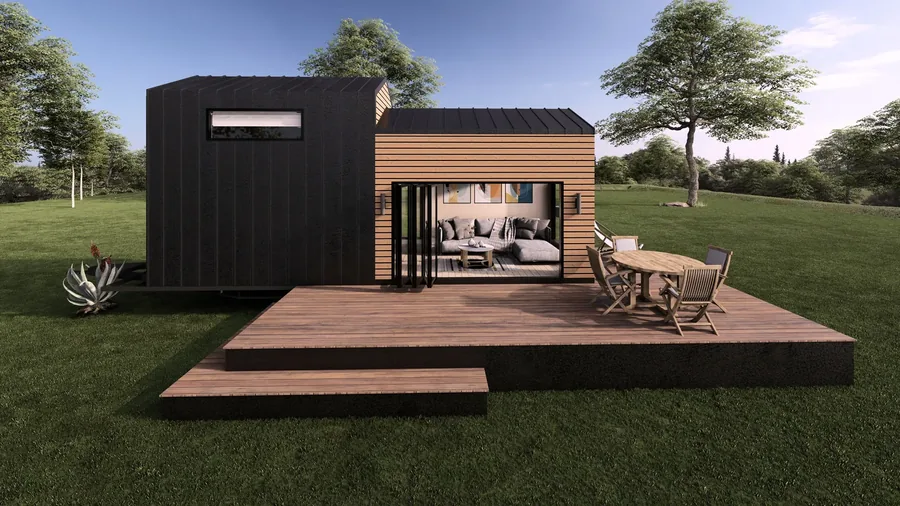
Construction, alteration or demolition of a building in Luxembourg generally requires prior authorisation from the mayor of the municipality. The project must comply with the relevant development and building plans.
1. Use before mobility
Residential, holiday-rental, office or temporary use can lead to different treatment. Actual use and duration usually matter more than the label tiny house, and a trailer is not a blanket exemption.
2. Plot and competent authority
Before ordering, check the address or parcel, intended use, duration, dimensions, utility connections and access with the competent authority in Luxembourg.
3. Technical documents
- Plans, elevations, sections and dimensions
- Structure, weights and trailer data where relevant
- Thermal, moisture, fire and services concepts
- Placement, foundations, access and unloading
4. Transport is a separate review package
Planning permission at the destination and road legality during delivery are separate questions. Model, route, registration, insurance, driving entitlement and special-transport permits require separate checks.
5. Official starting source
Luxembourg · official permit information ↗
Reviewed 2026-08-13. This article is general project guidance, not legal, authority, structural, energy or tax advice. Current law and the decisions of competent authorities are controlling.
FAQ
Construction, alteration or demolition of a building in Luxembourg generally requires prior authorisation from the mayor of the municipality. The project must comply with the relevant development and building plans.
Only if the trailer, documents, insurance, dimensions and weights comply along the full route. Otherwise delivery is planned on a low-loader or as special transport.
A Ro-Ro or ferry leg may form part of the route. Availability, port, schedule, handling and onward road delivery are confirmed only for the actual model and destination.
For EU destinations, the EU–Türkiye Customs Union and A.TR proof may be relevant depending on tariff classification and customs status. Import VAT, product requirements and national approval remain separate checks; Switzerland uses a separate customs process.