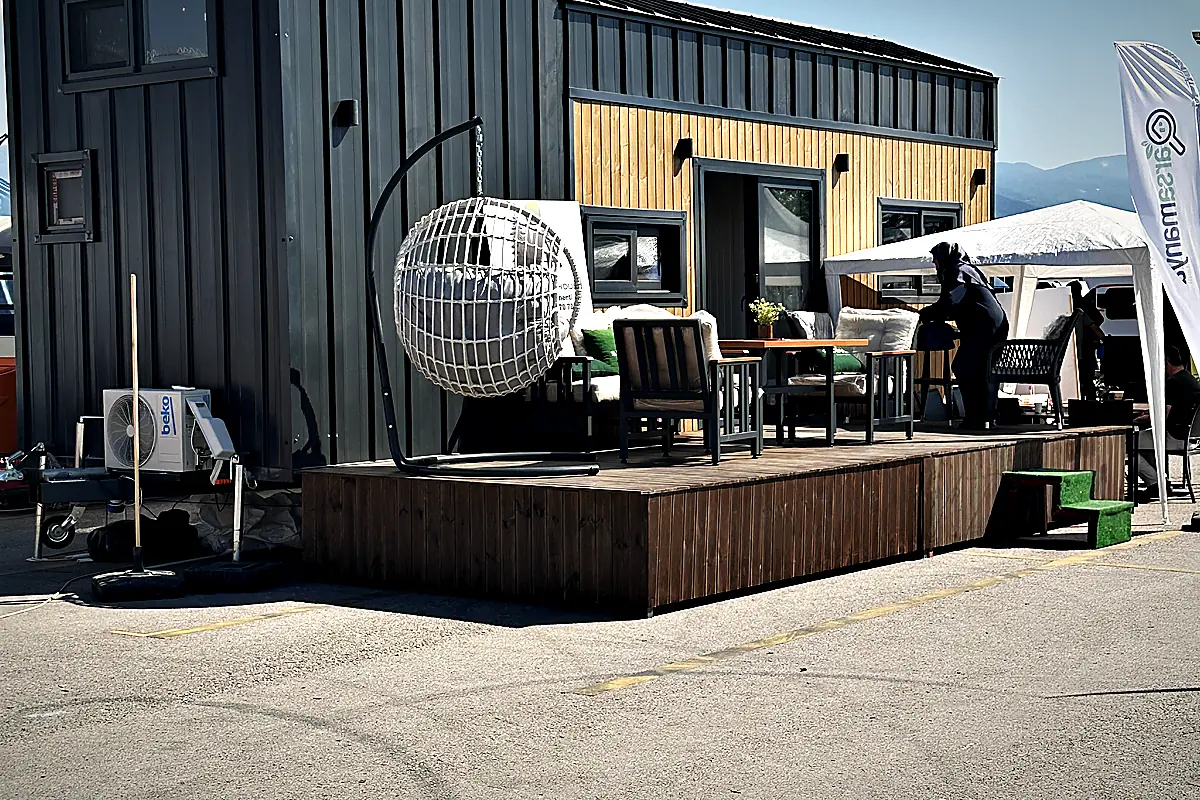
Modular hospitality. Thoughtfully planned at every scale.
Explore modular accommodation concepts for nature resorts, holiday parks, glamping destinations and hospitality expansions. Module design, guest experience and site logistics are considered together, from a first cluster of ten units to a destination with shared facilities.
Project scope, engineering, permissions and delivery are assessed for each destination in Europe and selected African markets.
Who typically plans this
- Resort owners and holiday-park operators adding or replacing accommodation units
- Hotel groups extending a property into its grounds
- Glamping and camping operators moving from tents and pods to four-season units
- Investors planning a new hospitality destination on secured land
Solution types in this family: Modular boutique resorts · Glamping villages · Eco resorts and nature retreats · Holiday-park accommodation · Lakeside, mountain and forest lodges · Hotel room clusters · Reception, restaurant and amenity modules.
What we can help you plan or supply
- A unit programme: how many of which type, for which guest, at which rate band
- A concept site layout showing units, circulation, service routes and shared facilities — schematic, for planning conversations
- Module specification for the climate and the season: insulation, glazing, heating and ventilation, facade for salt air or snow
- Production phasing and delivery sequence so the site keeps operating
- A responsibility matrix: what the operator provides, what local partners provide, what MODUNERA supplies
Three scales, as examples
Every figure here is illustrative. A real configuration follows the site, the permit and the operator's programme.
| Scale | Composition | Status |
|---|---|---|
| 10–20 units | Glamping village or first phase: one unit type, shared sanitary and reception modules optional | illustrative |
| 20–50 units | Holiday-park extension: two unit types, reception and restaurant module, phased delivery | illustrative |
| 50–100 units | Destination: unit mix by guest type, amenity cluster, service yard, staged over seasons | illustrative |
What a site needs before a unit arrives
- Zoning and the campsite or hospitality permit for the number and type of units
- Access for a 2.55 m wide, up to 9.7 m long unit on a low-loader, or a crane position
- Power supply per pitch and the fuse rating it allows
- Water, wastewater and stormwater: connections or an approved on-site solution
- Ground conditions under the supports, levelling, frost depth
Climate, energy and infrastructure options
- Coastal: facade variant, fittings and glazing chosen for salt air and driving rain
- Alpine: snow-load verification per site, roof form, year-round heating and frost-proof water routing
- Temperate forest: ventilation and drainage for damp and shade, gutters planned for leaves
- Hot climates: shading, cross-ventilation, cooling load — assessed per site
Who does what
The same table on every solution page, because the same questions come up in every project.
| Scope line | Responsibility |
|---|---|
| Land procurement | by the client unless contracted |
| Local planning and building permits | local licensed professionals and authorities |
| Foundations and site works | scope dependent |
| Utilities and connections | scope dependent |
| Customs, duties and VAT | destination and contract dependent |
| Transport, unloading and crane | project-specific |
| Installation and warranty | contractual scope dependent |
Fast answers, clear limits.
Production is planned in batches and delivery in a sequence that suits the site and the season. How many units leave the hall per batch, and in what order, is part of the proposal, not a fixed figure.
That depends on the destination: campsite regulations, building codes and local statutes treat a unit on supports differently. The feasibility step settles which rules apply before anything is specified.
Installation is a scope option. Depending on the country and the contract it is done by a local partner, coordinated by MODUNERA, or by the operator's own contractor to our handover documents. The proposal states which.
There is no MODUNERA-built resort to visit today. The concept pages show planning studies and are labelled as such; the photographs on this site are of real units, in production and delivered.
Plan a hospitality project.
Country, intended use, development stage, number of units, target date and approximate budget. That is enough for us to say what the next technical and commercial step is.